


Hi everyone,
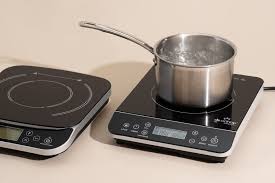
If you’re working with a small kitchen setup like I am, you’ll know that every square inch counts—and sometimes you want something quick, clean, and easy to carry around for cooking. After hunting for a good portable cooktop for a while (reading through reviews on Food Network, Good Housekeeping, and other sites) I narrowed it down to two models from NuWave. I thought I’d share an in-depth look at both and include what I learned, so if you’re in the same boat you can decide which might suit you best. And yes—I’ll also touch on the big questions: Do they really heat fast? Do they save power? Are they worth it over a basic electric burner?
The contenders
- NuWave Diamond Induction Cooktop (single burner version)
- NuWave Double Induction Cooktop (two-burner version)
Let’s dive into each.
1. NuWave Diamond Induction Cooktop
This is the more compact, single burner model from NuWave. It’s designed for portability and for smaller spaces—perfect for a small kitchen or a setup where you may only need one extra burner.
What stood out:
- It offers precise temperature control, ranging to high temperatures (some versions go up to 575 °F). Unsealed 4X4+2Green Home Adviser+2
- Because it’s induction, it heats the cookware directly and thus transfers energy more efficiently (less wasted heat going into the kitchen air). Wikipedia+1
- Users praise that it heats much faster compared to older electric coil or smooth-top burners. For example: “This induction cooktop heats up super fast compared to older electric range” in a review. DIY Solar Forum
- Good fit for small kitchens: since it’s just one burner, it takes up minimal space, can be stored away easily, and is easy to clean.
Things to watch / trade-offs:
- Even though induction is efficient, you’ll want cookware that’s compatible (magnetic base, flat bottom) to get full benefit. Without that, performance drops. Wikipedia+1
- Some users note that although the unit is great for many things, it might not bring a large volume of water to boil much faster than a top gas burner in all cases (depends on pan size and power). Food & Wine
- Since it’s a single burner, if you often cook with multiple pans or dishes at the same time you may feel limited.
Bottom line:
If your kitchen is small, space is at a premium, and you want a reliable single portable cooktop that’s faster and more efficient than a basic electric burner—this is a strong choice.
2. NuWave Double Induction Cooktop
If you have a slightly larger space, or you want the flexibility of two burners (for example simultaneous cooking of two pots), then the Double version is compelling.
What stood out:
- It features two large heating surfaces (8-inch coils) and independent controls for each burner. One review calls it “the largest, most powerful, and most precise two-burner induction cooktop I tested.” Epicurious+1
- Temperature range is wide: in one test, it reached from 100°F up to 575°F, in increments of 5°F (94 settings) on each side. Epicurious+1
- Because of dual zones, you can multitask: simmer on one side, sear on the other, etc. Great for cooking full meals.
- Also good for small kitchens where you might want more flexibility without installing a full built-in cooktop.
Things to watch / trade-offs:
- While both burners exist, the total power rating is shared: you may not get full power on both sides simultaneously if they hit the maximum output together. One review noted this is a limitation. Epicurious
- It’s larger in footprint than a single burner unit (so you need a little more space and storage).
- If you rarely need two burners, you might be paying for capability you don’t always use.
Bottom line:
The double burner model is ideal if you often cook with two pans, need more flexibility, but still want portability and efficiency in a small kitchen. It gives you more breadth while staying compact compared to a full stovetop.
How they compare & what you should ask yourself
When you’re deciding between these (or possibly other portable cooktops), here are key things to keep in mind:
Space & usage:
- How many burners do you realistically need? If you normally cook with one pot or pan at a time, the single-burner might suffice.
- Where will you place it? Ensure you have clearance, storage, and that the countertop surface is suitable.
Cookware compatibility & performance:
- Induction cooktops require cookware that is induction-compatible (magnetic base, flat bottom). If you already have compatible pans you’re good; if not, factor in a cookware update. reddit.com+1
- One user review comparing models said: “According to Duxtop customer service, all Duxtop induction cooktops have an induction coil length of 6.5″ while one or two of Nuwave’s have a length of 8″.” reddit.com
The size of the coil and pan base matters for performance.
Heating speed & efficiency:
- Induction generally offers faster heat-up and better energy efficiency compared to traditional electric or gas. For example: “It heats up super fast … the temp control seems much better then normal smooth top electric.” DIY Solar Forum
- Efficiency depends on pan size vs coil size, and proper contact. Induction works best when the pan size matches the coil. Wikipedia+1
Budget vs benefit:
- The double burner will cost more (and take up more space). If you don’t often cook multi-pots, the single burner might give you most of the benefit at lower cost.
- If you’re trying to save money, keep in mind the cookware compatibility cost, and maybe how much you’ll use the dual function.
Small kitchen friendly features:
- Flat surface for easy cleaning (induction surfaces don’t glow red like coils).
- Lower wasted heat means less of the kitchen warms up helpful in small spaces. Wikipedia+1
- Portability / storage: you can remove or tuck away when not in use.
My recommendation
Since you mentioned you have a small kitchen, cook a lot, and want something easy to carry and clean, here’s what I’d suggest:
- If you mainly cook one pan at a time, or you rarely cook two dishes simultaneously: go with the single burner model (NuWave Diamond). You’ll get great precision, faster heat, and minimal footprint.
- If you often have two things cooking (say one pot of sauce and one pan for something else), or you expect to expand to more cooking variety: go with the double burner model (NuWave Double). The extra flexibility will pay off, and you still keep portability and small-kitchen advantage.
In either case: make sure your cookware is induction-compatible so you don’t lose the benefits.
Frequently asked questions
Q: Do these really heat faster and save power like people say?
Yes—induction heats the cookware itself via electromagnetic fields, rather than heating the surface then transferring heat. That translates to faster heat-up and less wasted heat. Wikipedia+1 That said, “faster” doesn’t always mean “instantly like gas”—pan size, cookware material and starting temperature all matter.
Q: Are there better options I should check out?
Possibly—there are many portable induction cooktops on the market. For instance, one list mentioned the NuWave PIC Gold was best for long cooking sessions. Food & Wine If you find a model with similar specs (coil size, wattage, temperature range) at a better price or better fit for your kitchen footprint, it’s worth comparing.
Q: What about safety and cleanup?
Induction cooktops are generally safe: the surface stays cooler, there’s no open flame, and most units have safety cut-offs. One user said the NuWave model they had “10 stars out of 5… easy to clean, convenient to use, and heats really fast.” Green Home Adviser Because the cook surface stays relatively cool, spills are less likely to burn onto the surface as they would on a red-hot coil.
Final thought
If I were to summarise in one line: For a small kitchen, the NuWave single burner is a very smart upgrade over a standard electric or coil burnercompact, efficient, fast. If you want more flexibility (two burners, more cooking options), the NuWave double burner gives you that extra power without stepping up to a full built-in stovetop.
If you like, I can dig up 3-5 other portable cooktops (including non-NuWave ones) with price/feature comparatives so you can see whether you’re getting the best value. Would you like me to find those?
